
Best Home Winterization Services in Kansas City: What to Check Before Winter
Most people don't think about their attic or crawl space when they're getting their home ready for winter.
They think about the furnace. They disconnect the garden hose. Maybe they seal a drafty window.
But some of the problems that can make a home uncomfortable, inefficient—or expensive—during a Kansas City winter are hiding in the two places homeowners rarely see.
The attic and crawl space.

Before Winter Hits Kansas City: What’s Really Going On in Your Attic or Crawl Space?
If you’ve heard scratching above the ceiling, noticed a musty smell, found droppings, spotted a water stain, or wondered why certain rooms never seem to stay warm, your home may already be telling you something.
And the obvious problem may not be the whole problem.
A little animal activity can mean contaminated or damaged insulation.
A small water stain can point to wet insulation, hidden moisture, or mold.
A cold room might not simply need more insulation. The insulation you already have could be compressed, damp, contaminated, disturbed by animals, or no longer doing its job properly.
That’s why simply treating the first symptom you notice can leave the real problem untouched.
For Kansas City homeowners, there’s a better place to start:
Find out exactly what’s happening before you decide what needs to be fixed.
Looking To Winterize Your Kansas/Missouri Home?
Call Now For A Free Inspection!
(913) 297-9630
Common Signs of Attic and Crawl Space Damage
Homeowners usually call us after noticing one or more of these warning signs:
Scratching, scurrying, or thumping noises in the ceiling or under the floor
Droppings, nesting material, or chewed insulation
A musty, damp, or ammonia-like smell
Water stains on ceilings or walls
Visible mold or mildew
Damp, sagging, or flattened insulation
Standing water or moisture in the crawl space
Rooms that stay cold or drafty
Heating bills that keep climbing
Any one of these is worth taking seriously. Here's why it's often just the start.
The Problem With Fixing One Symptom at a Time
Attics and crawl spaces are connected systems. Insulation, airflow, moisture, ductwork, and the structure itself all affect each other. When one piece fails, it rarely fails alone.
Take the sound of animals in the attic. Setting a trap may deal with the animal you hear, but it doesn't tell you how it got in, how long it's been there, or what it left behind. Nesting, droppings, and urine can contaminate insulation, and a good share of the air in your home can move through that space. Contaminated insulation also loses much of its insulating value, so the same problem that affects your air quality can also be driving up your heating bill.
A water stain on the ceiling works the same way. Patching the drywall or fixing the obvious drip doesn't show you where the water traveled, what insulation or wood it soaked, or whether mold has already started growing out of sight.
In the crawl space, a torn vapor barrier can let ground moisture rise into the home. Animals that find a way in can tear into ductwork or tunnel through insulation. A slow pipe leak can drip for months without anyone knowing, because no one goes down there.
Fixing one symptom without understanding the entire space can mean spending money while leaving another problem behind.
“I Probably Just Need More Insulation”
Maybe.
But before paying someone to add insulation, there’s a more important question:
Why isn’t the insulation you already have doing its job?
Insulation doesn't stay perfect forever.
It can settle and compress.
Animals can disturb it.
Water can damage it.
Contamination can create other concerns.
And simply adding fresh insulation over an existing problem doesn't address what caused the problem in the first place.
There’s another consideration for Kansas City properties: our winters.
Your insulation needs to be appropriate for the conditions your home actually faces — not simply judged against a generic rule of thumb.
That’s why we believe the first step shouldn't be selling you more insulation.
It should be figuring out what's actually going on.
In Summary
Winterizing your home in Kansas City is not only about comfort but also about protecting your property and saving money on energy bills. By properly insulating your attic and crawlspace, maintaining your ductwork, installing a vapor barrier, and keeping wildlife at bay, you can ensure your home stays warm, safe, and efficient all winter long. Implementing these energy-saving tips will help you avoid expensive repairs while enjoying a cozy winter season!
The Whole-Home Winterization Inspection is our new way to uncover and fix hidden attic and crawl space problems without guessing, treating symptoms, or hiring multiple contractors.
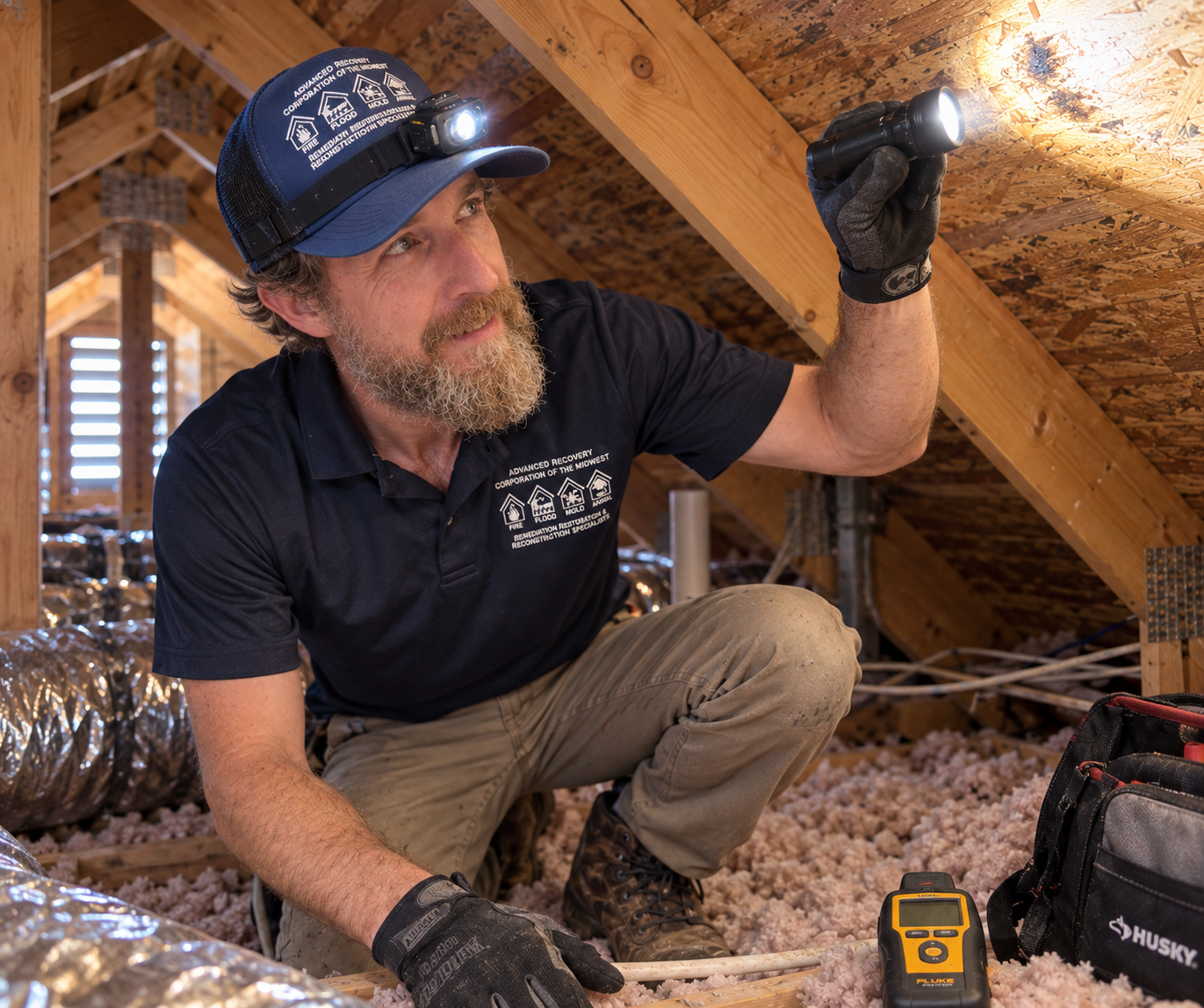
Instead of looking at one issue, our team inspects the whole space and everything that affects it. Because we handle animal contamination, water damage, and mold ourselves, we know what to look for and how these problems connect.
What We Check in Your Attic
Insulation quantity and condition. We check whether your insulation is thick enough for Kansas City's climate, and whether it still works. Old insulation compresses over time and can lose most of its insulating value even when it looks like it's all there. Insulation in good condition keeps your home warmer and your utility bills lower.
Animal activity and contamination. We look for nesting, droppings, urine, and other signs that animals have moved in. Because air from your attic can make its way into your living space, contamination up there can affect the air you breathe and contribute to allergies or illness.
Mold and moisture. We check for mold growth and moisture problems that may be developing out of sight.
Active and hidden leaks. We look for any signs of water getting in, including leaks that haven't made it to your ceiling yet.
What We Check in Your Crawl Space
Insulation. We make sure it's intact, adequate, and hasn't been torn up or tunneled through by animals.
Ductwork. We check for damage, since animals that get into a crawl space often tear into ducts.
Vapor barrier. We inspect the ground covering to make sure it's in place and doing its job of keeping moisture out.
Animal entry points. We look for any openings animals are using to get in and out.
Leaks and dripping pipes. Crawl space leaks often go unnoticed for a long time. We check pipes and surrounding areas for signs of water.
When we're done, you get the full picture of what's happening in your space and a clear plan for how to take care of it.
Your Winterization Inspection Is Free
The Whole-Home Winterization Inspection costs you nothing. If you're seeing signs of trouble in your attic or crawl space, this is the simplest way to find out exactly what's going on and what it will take to fix it, before the cold sets in. Call Advanced Recovery of the Midwest today to schedule your FREE inspection.