
How to Tell If Smoke Damage Is Still Affecting Your Home | Kansas City Fire Restoration
The Fire May Be Out, But the Damage Could Still Be Hiding
One of the most common things we hear from Kansas City homeowners after a fire isn't, "How do I repair the damage?"
It's:
"How do I know everything is actually okay now?"
The firefighters have left. The damaged materials have been removed. The insurance claim is moving forward. Friends and family are telling you how fortunate you were that the fire wasn't worse.
And yet, every once in a while, something catches your attention.
A smell that seems stronger when you walk in the front door after being away all day.
A stain that wasn't there before.
A room that still feels different even though you can't explain why.
Many homeowners assume these observations are simply part of the emotional aftermath of a fire. Sometimes they are. But sometimes they're your first indication that smoke damage is still affecting the home.
The challenge is that smoke damage rarely stays where the fire occurred. Smoke travels through the property, settles into porous materials, enters HVAC systems, and leaves behind contamination that isn't always visible to the naked eye.
At Advanced Recovery of the Midwest, we've inspected hundreds of fire-damaged properties throughout the Kansas City metro area, and one thing we've learned is that homeowners are usually right when they feel like something still isn't quite right.
If you've experienced a fire recently, here are some signs that smoke damage may still be present.
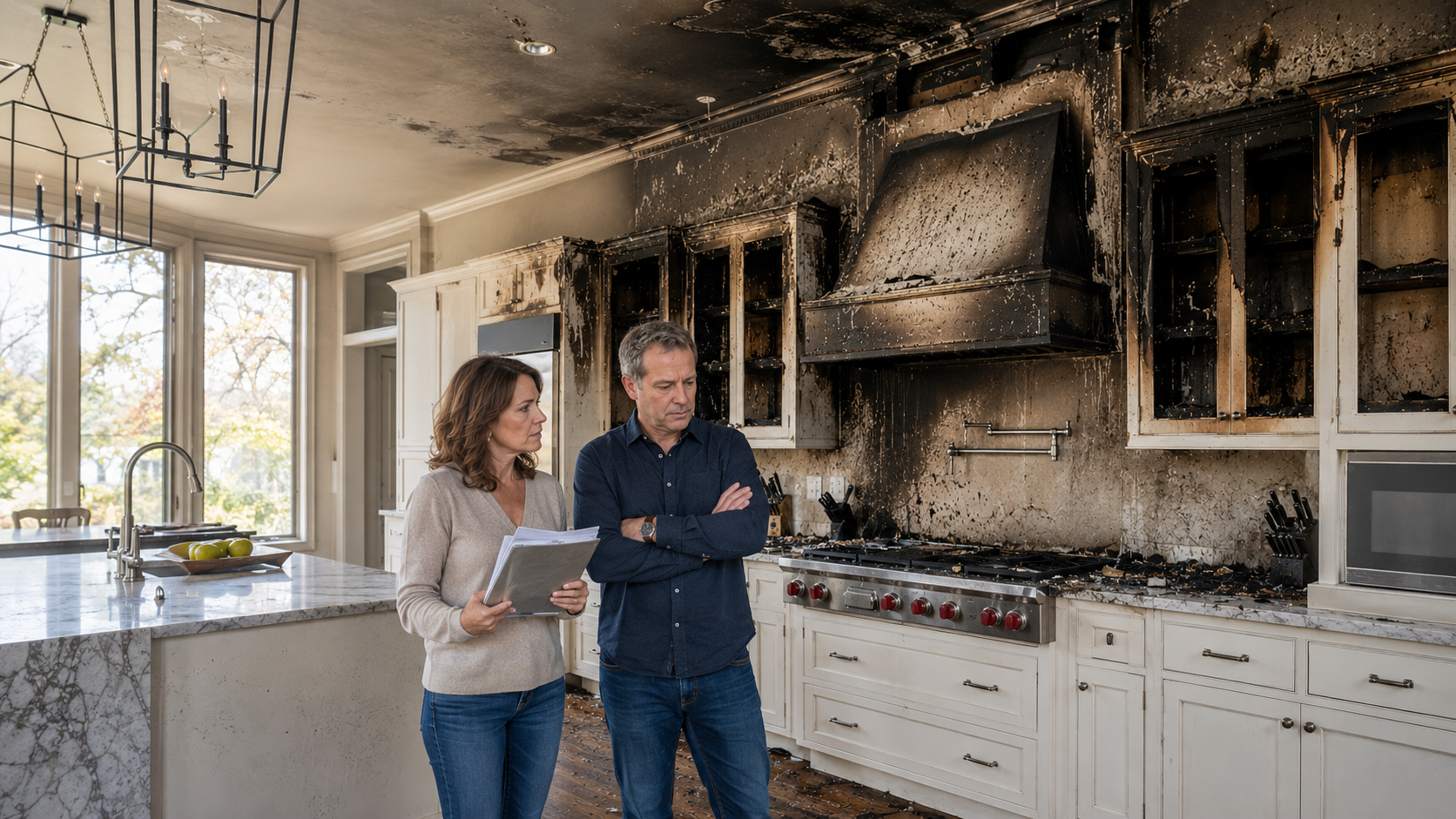
1. Persistent Smoke Odors
Most homeowners expect smoke odors immediately after a fire. What catches them off guard is when the smell returns weeks or even months later.
You may notice:
A smoky odor when returning home after being away
Stronger smells during humid or rainy weather
Odors that seem to come and go without explanation
Smoke smells coming from HVAC vents
Certain rooms smelling noticeably different than others
One of the first things homeowners tell us is, "I thought it was gone."
They cleaned. They aired out the home. They used odor eliminators. For a while, everything seemed fine. Then one day they walk through the front door and smell it again.
At that point, many begin questioning themselves.
"Am I imagining this?"
Usually, they aren't.
Smoke particles can become embedded in drywall, insulation, wood framing, carpeting, upholstery, and HVAC components. If those particles weren't completely removed during restoration, odors can continue resurfacing long after the visible cleanup appears complete.
The odor itself isn't usually what concerns homeowners most. It's what the odor represents. If they can still smell smoke, they naturally begin wondering what else might have been missed.
This is one of the most common reasons Kansas City homeowners request a professional smoke damage inspection. A lingering odor is often the first clue that smoke contamination may still be present somewhere in the home.
2. Yellow, Brown, or Black Stains on Walls and Ceilings
Discoloration from smoke damage rarely announces itself all at once. Instead, it tends to appear gradually.
You may notice:
Yellow discoloration on ceilings
Brown streaks near vents
Dark residue around light fixtures
Stains reappearing after painting
Shadowing that seems to become more noticeable over time
What makes these stains frustrating is that many homeowners believe the problem was already fixed. The walls were cleaned. The painting was completed. Everything looked normal.
Then a few weeks later, a faint stain begins bleeding through the paint.
Now they're left wondering whether the restoration was thorough enough in the first place.
In many cases, smoke residues contain oils and contaminants that continue working their way to the surface when underlying contamination wasn't completely removed.
What looks like a cosmetic issue is often evidence that smoke damage is still present beneath the surface.
3. Dusty or Oily Residue on Surfaces
Many homeowners describe this as a house that never quite feels clean.
You may notice:
Black residue on window sills
Dust returning unusually quickly after cleaning
Sticky or oily films on surfaces
Dark buildup around air vents
Cabinets and hard surfaces that feel different than they did before the fire
This is often where homeowners start feeling frustrated. They clean repeatedly. Yet the residue comes back.
They dust one weekend and feel like they're dusting again a few days later. At first, they assume they're paying closer attention because of the fire. But often they're noticing something real.
Soot particles are extremely fine and can continue circulating through the home when contamination remains inside HVAC systems, building materials, or areas that weren't properly cleaned during restoration.
When homeowners tell us, "No matter how much I clean, it never feels completely clean," we take that seriously. It's often worth investigating whether hidden soot contamination is still present.
4. Increased Respiratory Irritation
Not every sign of lingering smoke damage is visible. Sometimes the first clues come from how the home feels to live in.
Some homeowners report:
Eye irritation
Frequent coughing
Headaches
Throat irritation
Increased allergy symptoms
A feeling that certain rooms are harder to spend time in
After a fire, people often become highly aware of changes in their environment.
They may find themselves wondering whether symptoms are related to stress, seasonal allergies, or something else entirely.
While many factors can affect indoor air quality, lingering smoke contamination can sometimes contribute to these issues, particularly when contamination remains inside HVAC systems, insulation, or porous building materials.
If multiple family members notice symptoms that seemed to begin after the fire, it's worth having the property evaluated to rule out lingering smoke contamination as a contributing factor.
What To Do If You Suspect Lingering Smoke Damage
If you're noticing one or more of these warning signs, don't assume you're overreacting.
One of the most common things we hear from homeowners is that they felt something was wrong long before they could point to exactly what it was.
The sooner lingering smoke damage is identified, the easier it is to prevent ongoing odor issues, indoor air quality concerns, corrosion, and additional restoration costs.
Need Help After a Fire in Kansas City?
At Advanced Recovery of the Midwest, we offer free smoke and fire damage inspections throughout the Kansas City area. Our goal isn't to pressure you into unnecessary work (just look at our reviews for evidence of that!) it's to help you understand whether smoke contamination is still present, where it's located, and what options you have moving forward.
What makes our approach different is simple: we don't consider the job done until you're 5-Star Happy.
That means taking the time to answer your questions, thoroughly inspect the property, address both visible and hidden damage, and make sure you feel confident that your home is truly safe and restored before we leave.
If you're still wondering whether smoke damage could be affecting your home, schedule your free inspection today. We'll help you get clear answers, peace of mind, and a professional assessment of any lingering smoke or soot damage—at no cost and with no obligation.